Table of Contents
In India’s rice mills, every single grain tells a story. A red kernel hiding among white Basmati, an immature grain that will never cook properly, or a broken piece that drags down head-rice percentage – these seemingly small details decide whether a mill owner earns ₹4–6 lakh extra per month or loses it to rejection and rework. The difference between an ordinary mill and a highly profitable one often lies in one critical ability: accurate paddy grain identification.
Today, mills that process 100–300 tonnes of paddy every day cannot afford guesswork. Buyers in Dubai, Saudi Arabia and Europe demand zero red rice in Sella, cooperatives want less than 2 % broken in Ponni Steam, and branded players need consistent cooking characteristics. All these quality promises start at the very first step – knowing exactly what kind of paddy grain is entering the plant.
Why Grain Classification Has Become Non-Negotiable in Modern Indian Rice Mills
Ten years ago, most mills relied on manual sampling and visual checks. A skilled worker would spread a handful of paddy on a table under tube light and pick out chalky, yellow, or red grains. This method worked when mills ran 20–30 tonnes per day and buyers were less demanding. Today, when a single 5,000-tonne export order can be cancelled because of 0.5 % red rice contamination, manual sorting is simply too slow and too inconsistent.
Modern grain classification does three things simultaneously:
- Removes foreign varieties (red rice, black rice, wild rice) before parboiling
- Separates immature and chalky grains that affect gelatinization
- Identifies damaged and broken kernels early so they can be diverted to lower-value streams
When done correctly, accurate identification lifts head-rice recovery from the national average of 62–64 % to 69–71 %, adding ₹35–45 per quintal straight to the bottom line.
Spotting the Hidden Enemies: Red Rice, Immature Grains and Broken Rice
Red rice is the biggest headache for basmati and premium non-basmati mills. Even 0.2–0.3 % contamination can turn an entire lot into “common rice”, slashing its price from ₹5,500–6,000 per quintal to ₹2,800–3,200. Immature grains refuse to gelatinize properly during the parboiling process, remain white-centred after milling and create “white belly” that lowers cooking score. Broken grains, if not removed early, multiply during whitening and polishing, dragging overall recovery down by 3–5 %.
The challenge is that all three defects look almost identical to the naked eye when paddy is raw and covered with husk. Only advanced optical sensors that can detect subtle differences in colour, shape and texture at speeds of 10–15 tonnes per hour.
The Power of Accurate Measurement Tools and Sensors
Leading mills now use a combination of tools for paddy grain identification:
- Full-colour RGB + Infrared cameras that detect even slight redness under the husk
- Near-infrared (NIR) sensors that measure moisture and starch composition to identify immature grains
- Shape-analysis algorithms that flag cracked or twin grains likely to break during milling
- Multi-dimensional laser scanners that measure length, width and thickness to separate long-grain from medium-grain varieties
These systems achieve 98–99 % accuracy when calibrated properly for Indian varieties such as Pusa-1121, PR-126, MTU-7029, BPT-5204 and traditional reds like Kerala Matta or Assam Bora.
Color Sorters – The Final Gatekeeper
While pre-cleaners and destoners remove stones and straw, only bi-chromatic or tri-chromatic colour sorters can reliably remove defective paddy grains before they enter the parboiling tanks. Modern sorters from reputed manufacturers now come with:
- 16,000-pixel cameras scanning 30,000 grains per second per chute
- AI-based deep learning that recognises new defects without manual retraining
- Reverse sorting capability to recover good grains from the reject stream
- Ability to handle both raw paddy and parboiled paddy
A typical 8-chute sorter can process 8–12 tonnes of raw paddy per hour and remove red, yellow, chalky and black grains in a single pass. Mills that installed high-end colour sorters in the raw-paddy stage report 2–4 % extra head-rice recovery compared to those who sort only after whitening.
Direct Link Between Identification Accuracy and Final Yield
Every percentage point improvement in identification accuracy translates into measurable gains:
- 1 % reduction in red rice contamination → ₹80–120 extra per quintal in premium markets
- 1 % removal of immature grains → 1.2–1.5 % higher head-rice recovery
- Early removal of damaged grains → reduced polishing time and 0.5–0.8 % extra recovery
- Consistent variety purity → ability to sell directly to branded players at ₹400–600 premium per quintal
A 200-tonne-per-day mill investing ₹60–80 lakh in a modern paddy colour sorter and sensor package typically recovers the entire investment within 14–18 months through higher recovery and better pricing.
How SKF Elixer Integrates World-Class Grain Identification into Complete Plants
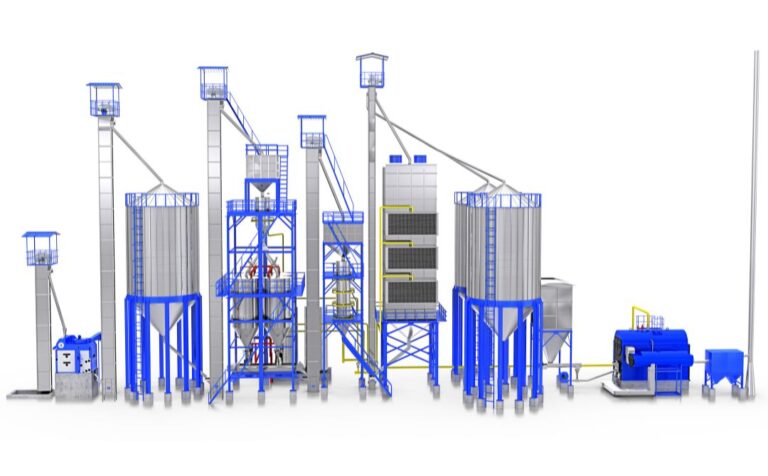
At SKF Elixer, we design every paddy processing plant with identification accuracy built in from day one. Our turnkey solutions include:
- Pre-cleaning lines with high-precision aspirators and thickness graders to remove obvious impurities
- Advanced raw-paddy colour sorters (8–20 chutes depending on capacity) placed before soaking tanks
- Stainless-steel construction throughout the sorting and handling section for zero rust and 10+ years of trouble-free life
- PLC-controlled hot-water automation and online cookers that adjust steaming parameters based on incoming grain quality data
- In-house manufactured elevators, blowers and heat exchangers precision-cut on Swiss Bystronic laser machines for perfect fitment
Because we manufacture over 90 % of components in-house under one roof, we can guarantee seamless integration between cleaning, sorting, parboiling, drying and milling sections. More than 7,000 plants supplied since 1987 across India and many other countries, stand testimony to this approach.
Conclusion
In today’s hyper-competitive rice market, the mills that will thrive are those that treat every single grain as valuable data. Accurate paddy grain identification is no longer a luxury – it is the foundation of higher yield, consistent quality and stronger pricing power.
By catching defects early, separating varieties precisely and feeding uniform paddy into the parboiling and drying sections, mill owners can unlock 4–8 % extra profit that was earlier lost as waste or discount.
When you partner with a manufacturer who understands both the science of grain identification and the realities of Indian paddy varieties, the results speak for themselves. Higher head rice, happier buyers, and a plant that keeps earning year after year with minimal maintenance – that is the real power of getting grain identification right.
Frequently Asked Questions (FAQs)
-
1. Can colour sorters remove red rice from raw paddy before parboiling?
Yes. Modern tri-chromatic sorters with infrared channels easily detect red pericarp even when the grain is covered with husk and remove it with >98 % accuracy.
-
2. How much extra head-rice recovery can I expect after installing a paddy-stage colour sorter?
Most of our customers report 2–4 % additional head-rice recovery, which translates to ₹40–80 lakh extra annual profit for a 100–150 TPD mill.
-
3. Is it necessary to sort both raw paddy and parboiled paddy?
Sorting at the raw stage removes red rice and immature grains permanently and protects the parboiling process. A second light sorting after whitening is recommended only for ultra-premium grades.
-
4. Do colour sorters work accurately on all Indian varieties including short bold grains like Sona Masuri or Ponni?
Yes. Plants come with sorters pre-calibrated for more than 40 popular Indian varieties (basmati, non-basmati fine, and bold grains).
-
5. What is the typical payback period for investing in advanced grain identification systems?
For a 100–200 TPD mill, the investment in pre-cleaning + paddy colour sorter + sensors is recovered within 12–20 months through higher recovery and premium pricing.
Good reads are meant to be shared


Fill out the form to receive a no-obligation price quote
Related Products